Slavery, the Underground Railroad
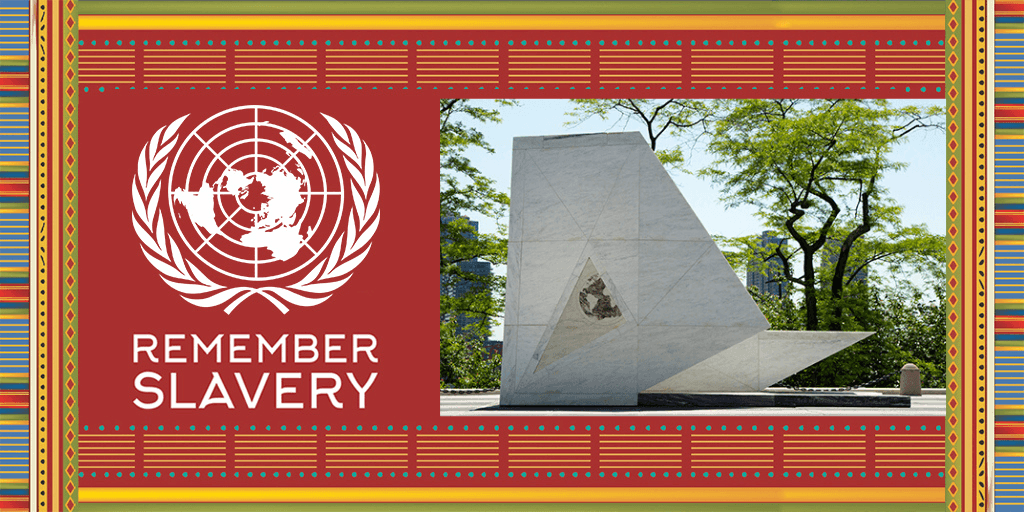
Permanent Memorial — The Ark of Return
The Permanent Memorial unveiled on 25 March 2015 to mark the International Day of Remembrance of the Victims of Slavery and the Transatlantic Slave Trade was designed by Rodney Leon, an American architect of Haitian descent. Located on the United Nations Visitors Plaza in New York, the memorial invites people everywhere to contemplate the legacy of the slave trade and to fight against racism and prejudice today.
"Canada has its own history of slavery — and it is a history we should never forget."
Black Enslavement in Canada
The Slavery Abolition Act, 1833
In Canada, enslaved people older than six years of age were re-designated as “apprentices” and required to work 40 hours per week without pay, as part of compensation payment to their former owners. Full emancipation was finally achieved at midnight on July 31, 1838. Ontario is the only province in Canada that has passed legislation proclaiming August 1 as Emancipation Day.
400+
15M+
30-40K
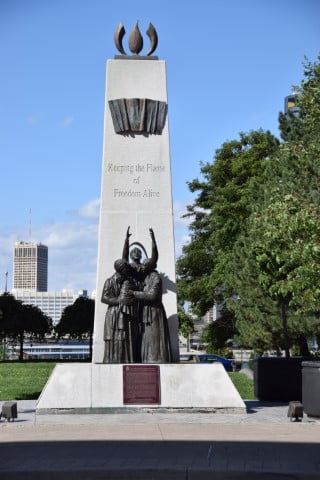
International Memorial — Windsor, Ontario
The International Memorial to the Underground Railroad is a two-part installation on either side of the Detroit River. Equally sited in Windsor and Detroit, the 22-foot high monuments face each other and pay tribute to the thousands that searched for freedom.
The Tower of Freedom in Windsor, Ontario depicts the refugees’ arrival into Canada and their overwhelming emotion upon encountering freedom. The monument features four life-size bronze figures on the north side — two women with a baby and a man standing behind with his arms outstretched in praise. On the south side of the monolith a young girl holds a doll and looks back across the river.
Josiah Henson
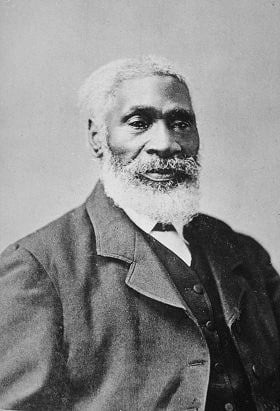
In 1830, Josiah Henson, with his wife and two youngest children, walked more than 600 miles to Canada. Once in Canada, Henson founded a settlement and laborer’s school for other fugitive slaves at Dawn, Kent County, Ontario — one of the final stops on the Underground Railroad. He repeatedly returned to the United States to guide an estimated 118 other slaves to freedom.
“The Life of Josiah Henson, Formerly a Slave, Now an Inhabitant of Canada, as Narrated by Himself” — Henson dictated his story to Samuel A. Eliot, a former Boston Mayor known for his anti-slavery views. Although an accomplished orator, Henson had not yet learned to read and write. The narrative provides a detailed description of his life as a slave in the south. Visit the Josiah Henson Museum of African-Canadian History
Harriet Tubman
St. Catharine’s, Ontario was a focus of Tubman’s years in Canada. During the American Civil War (1861–1865), she served as an armed scout and spy for the Union Army. In her later years, Tubman was an activist in the movement for women’s suffrage.
National Underground Railroad Freedom Center
A museum of conscience, an education center, a convener of dialogue, and a beacon of light for inclusive freedom around the globe. The Center provides online learning resources and lesson plans.
Credits & Reference Materials
- Rodney’s Journey Making The Ark of Return (Video) — “…the Ark of Return is designed to allow people, if they are not physically able to return, at least they can acknowledge the fact that people had suffered great tragic losses and experiences in order to make it possible for our lives to be where we are today.” Rodney Leon, Architect.
- Download the Ark of Return brochure (pdf)
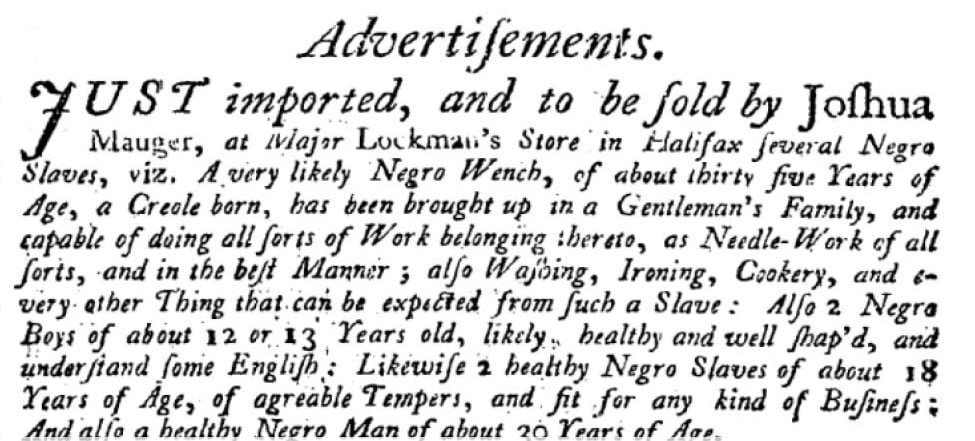
- Sale of Enslaved: Nova Scotia Archives Halifax Gazette, 30 May 1752
- Natasha L Henry. “Black Enslavement in Canada”. The Canadian Encyclopedia, 09 June 2020, Historica Canada.
- Underground Railroad Memorial in Windsor, Ontario. Dwight, Ed, 1933-, “Tower of Freedom (Windsor, Ontario),” Contemporary Monuments to the Slave Past. Licensed under Creative Commons Attribution-NonCommercial-NoDerivatives 4.0 International.
- Josiah Henson in 1877 (June 15, 1789 – May 5, 1883), unattributed. Public Domain.
- Harriet Tubman after the American Civil War. Library of Congress, Washington, DC. Public Domain.